EN
EN
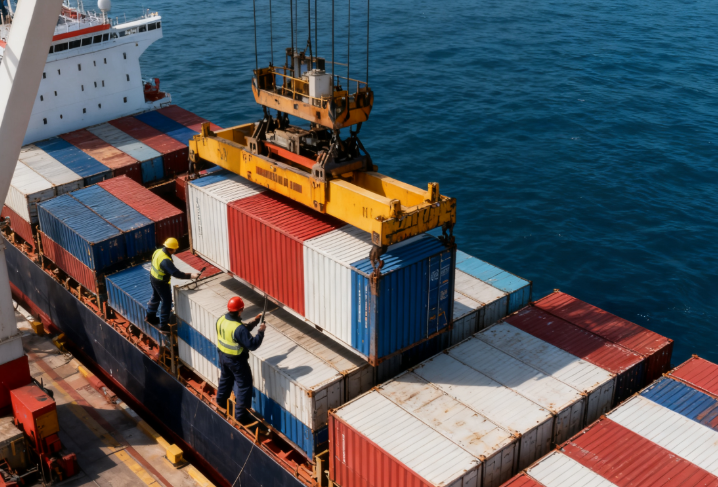
Cost-Effectiveness of Sea Freight in Global Logistics
Sea Freight vs. Air and Land: Lower Costs for High-Volume Shipments
Shipping by sea cuts transportation expenses dramatically compared to flying things around, sometimes saving businesses as much as 80% on big loads. Take moving ten tons of machinery from Shanghai to LA for instance: doing it by ship would set someone back about $5,800 while air freight jumps all the way to $26,500 according to World Bank numbers from 2023. Modern container ships are absolutely massive these days, capable of hauling 24,000 containers at once which is way beyond what any truck fleet or airplane could handle. This means companies can get their bulk stuff, heavy machinery, and everyday items across oceans without breaking the bank. Around 80 percent of everything traded worldwide travels this way because ships burn less fuel per ton mile than other modes and benefit from huge volume discounts. The average cost ends up under ten cents per kilogram for most products when shipped by sea.
Key Factors Influencing Sea Freight Shipping Costs
Four variables dominate pricing:
- Container type: Standard 20/40” containers cost $1,200–$2,500 per trip, while refrigerated units add 40–60%
- Fuel surcharges: Represent 15–25% of total costs, tied to global oil prices
- Port congestion: Delays add $150–$400 daily per container in demurrage fees
- Seasonal demand: Rates spike 30–50% during Q4 holiday shipments
These factors result in a $1,300–$5,000 per container price range on major Asia-Europe routes.
FCL and LCL Options: Maximizing Cost Efficiency
Companies looking to save money on shipping often go with Full Container Load (FCL) when their goods take up more than 15 cubic meters of space, while opting for Less than Container Load (LCL) makes sense for smaller loads. The cost difference between these options is pretty significant too FCL can be around 20 to 30 percent cheaper per item, although businesses need to fill at least 85% of the container to make it worthwhile. When dealing with medium sized shipments between 5 and 14 CBM, many companies find that LCL works best since it combines their cargo with others heading the same direction. This consolidation approach typically brings down expenses by roughly 40% when compared to flying the goods instead, which explains why so many logistics managers prefer sea transport for these kinds of shipments despite longer delivery times.
Long-Term Savings in International Supply Chains
Businesses that rely on ocean transport instead of primarily air shipping typically cut their logistics expenses by around 18 to 22 percent each year according to OECD data from 2023. Take a company moving about 500 containers per year for instance they might end up saving approximately $2.3 million annually. These savings don't just sit in bank accounts either many companies reinvest them into research projects or expanding into new markets. When companies plan their supply chains strategically, they can knock another 12 to 15 percent off landed costs by making better use of containers and finding alternative shipping routes. This makes maritime transportation not just cheaper but practically essential for businesses involved in international commerce today.
Ideal for Bulk, Heavy, and Oversized Cargo Transport
Handling High Volume and Weight with Ease
When it comes to moving really heavy stuff in large quantities, nothing beats shipping by sea. Today's big container ships can actually haul around 20,000 containers at once according to industry reports from IHS Markit last year. Sea transport stands apart from planes or trucks because it relies on special containers designed for massive weights. Some of these containers have extra strong floors to hold down things like factory equipment or steel rolls that weigh more than 30 tons each. There are also flat rack containers that collapse when not needed, which makes them perfect for bulky items like construction gear. These specialized containers help pack more goods into each shipment, making ocean transport so efficient for certain types of cargo.
| Container Type | Best For | Key Features |
|---|---|---|
| Open Top | Overheight cargo | Removable tarpaulin, top-side loading |
| Platform | Odd-sized/overweight goods | No walls/roof, heavy-duty floor |
| Flat Rack | Out-of-gauge (OOG) shipments | Foldable sides for wide/irregular shapes |
Capabilities for Oversized and Industrial Shipments
When shipping unusual items such as massive wind turbine blades or parts from power plants, ocean transport gives companies access to special ships with submerged loading areas and giant cranes that can handle over 2000 tons at once. The maritime industry has developed better securing methods along with materials that absorb shocks during transit. According to recent studies from the Maritime Safety Committee in 2023, these improvements cut down on damage risks for delicate machinery by about one third when compared to trucking those same goods across land. Another advantage comes from how these ships can be rearranged inside. This flexibility means they can carry both regular sized packages alongside their oversized counterparts all in one trip thanks to smart packing arrangements worked out ahead of time.
Environmental Sustainability and Lower Carbon Footprint
Sea Freight’s Low CO2 Emissions Compared to Other Modes
When looking at carbon emissions, sea freight actually releases between 10 to 40 times less CO2 per ton-mile compared to air freight according to the International Maritime Organization report from 2023. The numbers get even more interesting when we look at container ships specifically. These vessels emit only around 10 grams of CO2 per ton-kilometer, while trucks clock in at about 64 grams and planes blow way past that with over 500 grams per ton-kilometer as noted by World Bank statistics in 2023. Why such a big difference? Well, ships are built to carry huge amounts of cargo at once, which means they can spread their fuel costs across many tons of goods instead of burning through fuel for each individual item like other transport methods do.
Role of Ocean Shipping in Sustainable Global Trade
About 80 percent of all global trade moves across oceans via ships, yet maritime transport accounts for just around 2.9% of total greenhouse gas emissions according to data from the International Transport Forum in their 2023 report. Many shipping companies have started implementing slower speeds to save fuel costs, which can reduce consumption by roughly 30%. Some are also experimenting with new kinds of fuel like green ammonia as alternatives to traditional bunker fuels. All these changes make sense when looking at the bigger picture set out by the International Maritime Organization. Their target is pretty ambitious actually - they want to cut ship emissions in half compared to what they were back in 2008 by the year 2050. That gives the industry about two decades to figure things out before facing serious consequences.
Balancing Growth and Environmental Responsibility
The 2020 global sulfur cap reduced ship fuel sulfur content by 85%, preventing 8.5 million metric tons of SOx emissions annually. Over 5,300 vessels now operate with scrubber systems, and 24% of new builds feature LNG-ready engines (Clarksons Research 2023). By combining scale with emission controls, sea freight supports economic growth while advancing environmental stewardship.
The Backbone of Global Trade and International Commerce
Over 90% of Global Cargo Moves by Sea Freight
The oceans are really the lifeblood of global trade, moving around 90% of all cargo worldwide when we look at volume. The numbers get even bigger when we check out what's happening on the seas these days. A recent report from the International Maritime Organization shows that ships are hauling something like 11 billion tons of stuff every year. Why do ships still rule this space? Well, they just can't be beat when it comes to moving massive amounts of bulk stuff like oil, grains, and raw materials alongside all those containers full of consumer goods everyone wants. Take a look at modern container ships today - they're packed with so many TEUs (those twenty foot equivalent units) that they basically keep the whole manufacturing and retail world going. These vessels connect Asian factories straight to shoppers in Europe and throughout the Americas, making sure products make their way from factory floor to store shelves no matter where someone happens to live.
Critical Role in Supply Chains Across Industries
Sea freight keeps those complicated supply chains running across borders for things like cars, energy equipment, and retail goods. Big industrial companies need ships to move stuff that just won't work by plane or truck. Think about it: heavy machinery, giant steel rolls, and parts for wind turbines are all shipped this way because there's no other realistic option. Wind power companies especially depend on special ships to get their offshore wind farms built on time. Some industries might seem too fast paced for sea transport, but they still use it for non-perishable items where saving money matters more than speed. Ocean shipping basically makes sure factories have what they need when they need it, while also getting products out to customers around the world. Without reliable sea routes, entire manufacturing operations would grind to a halt and global trade would become much less stable.
Operational Reliability and Strategic Advantages for Long-Distance Shipping
Efficiency and Safety in International Maritime Logistics
Modern sea freight achieves 94% schedule adherence on major trade lanes (Maritime Logistics Report 2024), making it the safest and most dependable option for industrial cargo. Real-time tracking systems and ISO-certified container security protocols reduce loss risks and maintain predictable delivery timelines.
Managing Transit Times: Reliability vs. Delays
While weather and port congestion can extend voyages by 7–14 days, most delays occur predictably during peak seasons. Leading carriers now offer real-time rerouting tools and contingency surcharges to mitigate disruptions, enhancing resilience across supply chains.
Why Sea Freight Excels in Long-Distance Trade Routes
- Fuel efficiency: Ships move 1 ton of cargo 47x farther per gallon than aircraft
- Route redundancy: Multiple daily crossings across Pacific and Atlantic routes ensure consistent capacity
- Infrastructure leverage: Strategic port partnerships reduce costs by 28% compared to land-air hybrid models
This operational strength explains why sea freight manages 58% of transpacific trade despite longer lead times (OECD 2024).
FAQ Section
What are the main advantages of sea freight over air freight?
Sea freight offers significant cost savings, especially for high-volume shipments, and contributes less to carbon emissions compared to air freight.
How does sea freight contribute to environmental sustainability?
Sea freight emits lower CO2 per ton-mile than air and land freight, and the industry is adopting cleaner fuel technologies.
Why is sea freight important for global trade?
Sea freight accounts for transporting around 90% of global cargo, making it essential for supply chains across numerous industries and international commerce.
What factors affect sea freight shipping costs?
Shipping costs are influenced by container type, fuel surcharges, port congestion, and seasonal demand.
Why might a company choose Full Container Load (FCL) over Less than Container Load (LCL)?
FCL is more cost-effective for shipments taking up significant space, whereas LCL is better for smaller loads through consolidation.